Case Studies
Protecting Immigrant Families Campaign
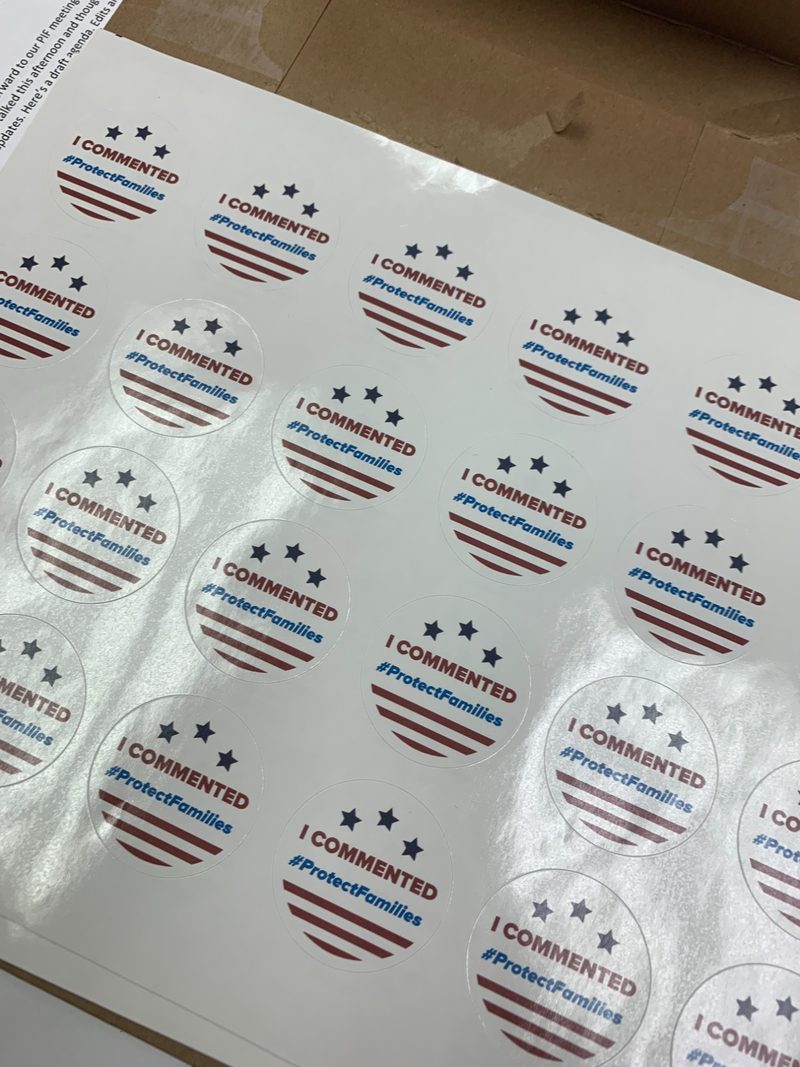
In the first weeks of 2017, news reports of a leaked executive order indicated that President Trump was planning to make drastic changes to the definition of public charge, a century-old policy applied in determining whether an immigrant can be admitted to the United States or receive a green card. These changes would both apply a “wealth test” and treat the receipt of a wide range of public benefits as a negative factor.
In response, together with partners at CLASP and the National Immigration Law Center, I helped conceive, launch and implement the multi-sector Protecting Immigrant Families (PIF) campaign, growing it from a few organizations to over 500 active members across anti-poverty, health care, nutrition, disability, senior and faith-based advocacy.
Operating under intense time pressure and with limited resources, we built a structure that let very different partners contribute in ways that matched their strengths. Early on I identified the problem that the rule mattered to many groups but was unlikely to be the top priority for any of them. So we asked to speak at meetings they were already holding rather than expecting people to join a separate webinar, and identified sector leads to write template comments that made it easy for their partners to take part.
We needed both quality and quantity. “Quality” meant detailed technical comments that gave the substantive basis for litigation and for the Biden Administration’s eventual replacement of the rule. Alongside that we needed mass engagement to build political opposition, without creating additional fear in the communities affected. We set an ambitious goal of at least 100,000 public comments and ultimately delivered more than a quarter of a million.
I subsequently helped transition PIF to operating as an independent organization. I currently serve as a senior policy consultant to PIF, focusing on administrative actions.
Related publications
- Danker, Gonzales, Lower-Basch, and Rachamallu, House Republican Reconciliation Bill Takes Away Health Coverage, Food Assistance, Tax Credits from Millions of Immigrants and Their Families,
Benefit Modernization
I have a proven track record guiding states and localities in modernizing service delivery across Medicaid, SNAP, TANF and other programs to improve access and customer experience, connecting big-picture strategy with deep policy expertise and attention to implementation detail. I love partnering with state and county agencies, advocates, and people directly impacted to overcome the barriers to coordination.
Under Work Support Strategies, a major project on improving policy and practice in the delivery of public benefits, I provided technical assistance to state and county agencies on federal requirements and flexibilities, best practice from other states, and the use of human-centered design, process mapping, behavioral economics and rapid cycle testing. That work increased the share of cases with same-day decisions — a critical factor in preventing setbacks from spiraling into crises.
I led Advancing Strategies to Align Programs (ASAP), a project supporting a learning community of state-based advocates in 15 states focused on administrative advocacy. It produced policies that reduced administrative burden, clearer client communications and more effective use of technology, increasing enrollment and reducing churn.
I identified opportunities such as improving ex parte renewals and using presumptive eligibility to streamline enrollment long before “administrative burden” became a common subject of conversation.
Related publications
- Lower-Basch and Mehta, Putting the Pieces Together for Families with Young Children: Aligning State HHS, Nutrition, Child Care, and Paid Family Leave,
- Lower-Basch and Fairbanks, Understanding State Contexts for Benefit Administration,
- Lower-Basch, Fight Poverty, Hunger and Health Care Needs by Removing Barriers to Program Access,
- Using Administrative Advocacy to Improve Access to Public Benefits,
- Lower-Basch, Improving Access, Cutting Red Tape,
- Lower-Basch and Schmit, TANF and the First Year of Life: Making a Difference at a Pivotal Moment,
- Lower-Basch and Dorn, Moving to 21st Century Public Benefits: Emerging Options, Great Promise, and Key Challenges,
Uses of TANF and the Emergency Fund
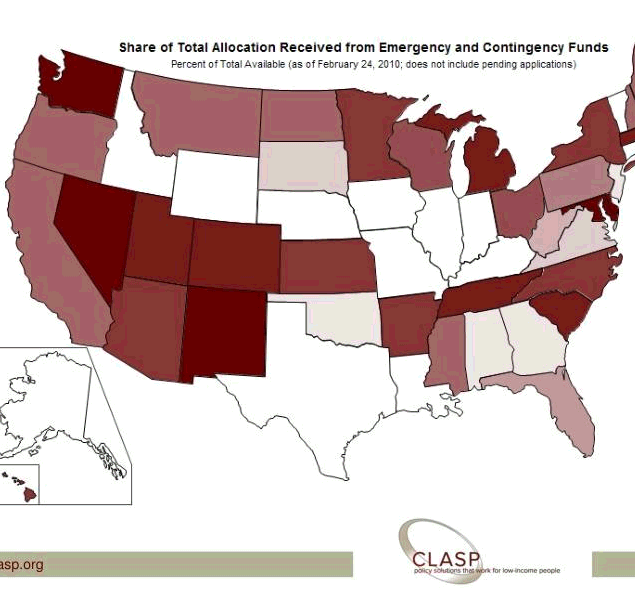
During the Great Recession, Congress authorized an additional $5 billion TANF Emergency Contingency Fund to support cash assistance, one-time supports and subsidized jobs.
I soon realized that states were not drawing these funds down, and that without intensive advocacy and technical assistance they were likely to leave them on the table despite the deep need.
I delivered that assistance: a comprehensive explainer of the allowable uses of TANF and state Maintenance of Effort funds, presentations in multiple states, and a weekly tracker of state drawdown, which helped create a sense of urgency to access the funds. Alongside it I developed and led real-time research on how states were using the money, so states could learn from each other and tell an accurate story to the public and to Congress. Because of the limits on federal TANF reporting, there would have been no national data on the use of these funds without that effort.
States ultimately drew down the full $5 billion — twice what the Congressional Budget Office had originally estimated they would use. Families received cash assistance, and more than 260,000 low-income parents and young people were hired into subsidized jobs.
Related publications
- Lower-Basch, Rethinking Work Opportunity: From Tax Credits to Subsidized Job Placements,
- Pavetti, Schott and Lower-Basch, Creating Subsidized Employment Opportunities for Low-Income Parents: The Legacy of the TANF Emergency Fund,
- Lower-Basch, Guide to Use of TANF and MOE Funds,